




Height rank
One World Trade Center
New York City













dboxstudio.jpg)
som.jpg)
som.jpg)
som.jpg)

som.jpg)
som-dboxstudio.jpg)


SOM-dboxStudio2.jpg)
somqubdesign.jpg)


- Facts
-
Metrics
You must be a CVU Member to view this resource.
Official Name
One World Trade Center
Other Names
Freedom Tower, 285 Fulton Street
Name of Complex
Type
Building
Status
Completed
Completion
2014
Country
City
Address
Function
A mixed-use tall building contains two or more functions (or uses), where each of the functions occupy a significant proportion of the tower's total space. Support areas such as car parks and mechanical plant space do not constitute mixed-use functions. Functions are denoted on CVU "Tallest Building" lists in descending order, e.g., "hotel/office" indicates hotel function above office function.
Office
Structural Material
Both the main vertical/lateral structural elements and the floor spanning systems are constructed from steel. Note that a building of steel construction with a floor system of concrete planks or concrete slab on top of steel beams is still considered an “all-steel” structure as the concrete elements are not acting as the primary structure.
All-Concrete
Both the main vertical/lateral structural elements and the floor spanning systems are constructed from concrete which has been cast in place and utilizes steel reinforcement bars and/or steel reinforced concrete which has been precast as individual components and assembled together on-site.
All-Timber
Both the main vertical/lateral structural elements and the floor spanning systems are constructed from timber. An all-timber structure may include the use of localized non-timber connections between timber elements. Note that a building of timber construction with a floor system of concrete planks or concrete slab on top of timber beams is still considered an “all-timber” structure as the concrete elements are not acting as the primary structure.
Mixed-Structure
Utilizes distinct systems (e.g. all-steel, all-concrete, all-timber), one on top of the other. For example, a Steel Over Concrete indicates an all-steel structural system located on top of an all-concrete structural system, with the opposite true of Concrete Over Steel.
Composite
A combination of materials (e.g. steel, concrete, timber) are used together in the main structural elements. Examples include buildings which utilize: steel columns with a floor system of reinforced concrete beams; a steel frame system with a concrete core; concrete-encased steel columns; concrete-filled steel tubes; etc. Where known, the CVU database breaks out the materials used within a composite building’s primary structural elements.
Concrete-Steel Composite
Energy Label
LEED Gold BD+C
Official Website
Height
541.3 m / 1,776 ft
Floors Above Ground
94
Floors Below Ground
5
# of Elevators
73
Top Elevator Speed
10.16 m/s
Tower GFA
325,279 m² / 3,501,274 ft²
Rankings
-
By function
You must be a CVU Member to view this resource.
-
By material
You must be a CVU Member to view this resource.
Construction Schedule
Proposed
Construction Start
Completed
Architect
Usually involved in the front end design, with a "typical" condition being that of a leadership role through either Schematic Design or Design Development, and then a monitoring role through the CD and CA phases.
Structural Engineer
The Design Engineer is usually involved in the front end design, typically taking the leadership role in the Schematic Design and Design Development, and then a monitoring role through the CD and CA phases.
The Peer Review Engineer traditionally comments on the information produced by another party, and to render second opinions, but not to initiate what the design looks like from the start.
MEP Engineer
The Design Engineer is usually involved in the front end design, typically taking the leadership role in the Schematic Design and Design Development, and then a monitoring role through the CD and CA phases.
Contractor
The main contractor is the supervisory contractor of all construction work on a project, management of sub-contractors and vendors, etc. May be referred to as "Construction Manager," however, for consistency CTBUH uses the term "Main Contractor" exclusively.
Other Consultant
Other Consultant refers to other organizations which provided significant consultation services for a building project (e.g. wind consultants, environmental consultants, fire and life safety consultants, etc).
Other Consultant refers to other organizations which provided significant consultation services for a building project (e.g. wind consultants, environmental consultants, fire and life safety consultants, etc).
These are firms that consult on the design of a building's façade. May often be referred to as "Cladding," "Envelope," "Exterior Wall," or "Curtain Wall" Consultant, however, for consistency CTBUH uses the term "Façade Consultant" exclusively.
Material Supplier
Material Supplier refers to organizations which supplied significant systems/materials for a building project (e.g. elevator suppliers, facade suppliers, etc).
Material Supplier refers to organizations which supplied significant systems/materials for a building project (e.g. elevator suppliers, facade suppliers, etc).
You must be a CVU Member to view this resource.
Owner/Developer
Port Authority of New York and New Jersey; The Durst Organization
Silverstein Properties
Architect
Usually involved in the front end design, with a "typical" condition being that of a leadership role through either Schematic Design or Design Development, and then a monitoring role through the CD and CA phases.
Structural Engineer
The Design Engineer is usually involved in the front end design, typically taking the leadership role in the Schematic Design and Design Development, and then a monitoring role through the CD and CA phases.
The Peer Review Engineer traditionally comments on the information produced by another party, and to render second opinions, but not to initiate what the design looks like from the start.
Schlaich Bergermann und Partner
MEP Engineer
The Design Engineer is usually involved in the front end design, typically taking the leadership role in the Schematic Design and Design Development, and then a monitoring role through the CD and CA phases.
Project Manager
The CTBUH lists a project manager when a specific firm has been commissioned to oversee this aspect of a tall building’s design/construction. When the project management efforts are handled by the developer, main contract, or architect, this field will be omitted.
The CTBUH lists a project manager when a specific firm has been commissioned to oversee this aspect of a tall building’s design/construction. When the project management efforts are handled by the developer, main contract, or architect, this field will be omitted.
STV
Contractor
The main contractor is the supervisory contractor of all construction work on a project, management of sub-contractors and vendors, etc. May be referred to as "Construction Manager," however, for consistency CTBUH uses the term "Main Contractor" exclusively.
Other Consultant
Other Consultant refers to other organizations which provided significant consultation services for a building project (e.g. wind consultants, environmental consultants, fire and life safety consultants, etc).
Other Consultant refers to other organizations which provided significant consultation services for a building project (e.g. wind consultants, environmental consultants, fire and life safety consultants, etc).
Cerami & Associates
Philip Habib & Associates
Arnold & Porter LLP
These are firms that consult on the design of a building's façade. May often be referred to as "Cladding," "Envelope," "Exterior Wall," or "Curtain Wall" Consultant, however, for consistency CTBUH uses the term "Façade Consultant" exclusively.
Citadel Consulting; Lerch Bates
Mueser Rutledge Consulting Engineers
Mathews Nielsen Landscape Architects; Peter Walker Landscape Architects
Brandston Partnership, Inc.; Claude Engle
Wordsearch
Legends; The Hettema Group
Ducibella Venter & Santore
Philip Habib & Associates
Pentagram
Material Supplier
Material Supplier refers to organizations which supplied significant systems/materials for a building project (e.g. elevator suppliers, facade suppliers, etc).
Material Supplier refers to organizations which supplied significant systems/materials for a building project (e.g. elevator suppliers, facade suppliers, etc).
Kuraray; POHL Group; CS Group Construction Specialties Company; Viracon
Grace Construction Products
Studco Australia Pty Ltd
DYWIDAG DSI
Dow Corning Corporation; Sika Services AG
CVU Awards & Distinctions
10 Year Award 2024 Winner
2024 CVU Awards
Best Tall Building, by Region 2015 Winner
2015 CVU Awards
Global News

15 April 2019
New Architects Brought in for Manchester’s St. Michael’s Tower
Skidmore, Owings & Merrill (SOM) has been brought in to deliver Hodder + Partners’ controversial Saint Michael’s tower in Manchester, with the local practice kept...
About One World Trade Center
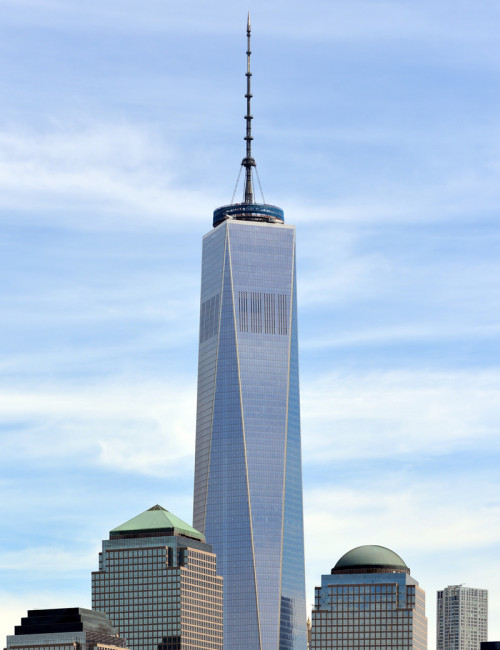
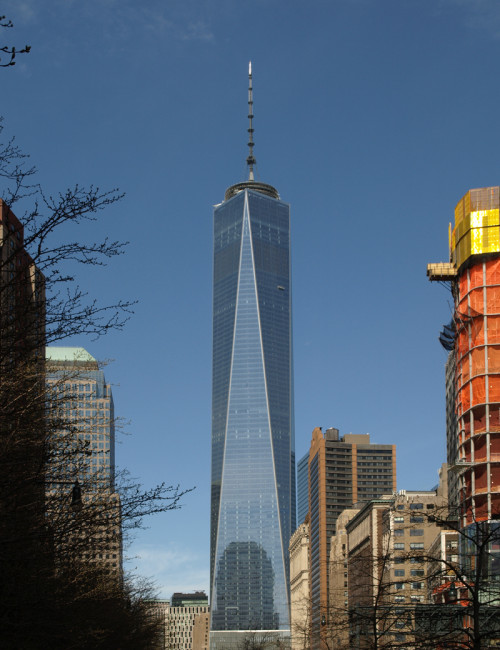
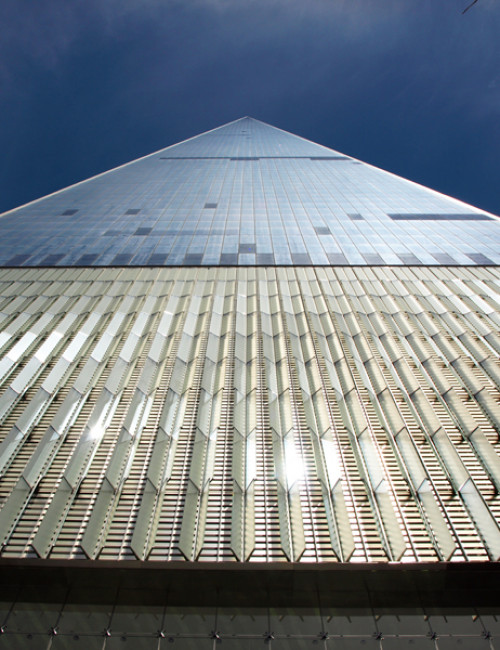
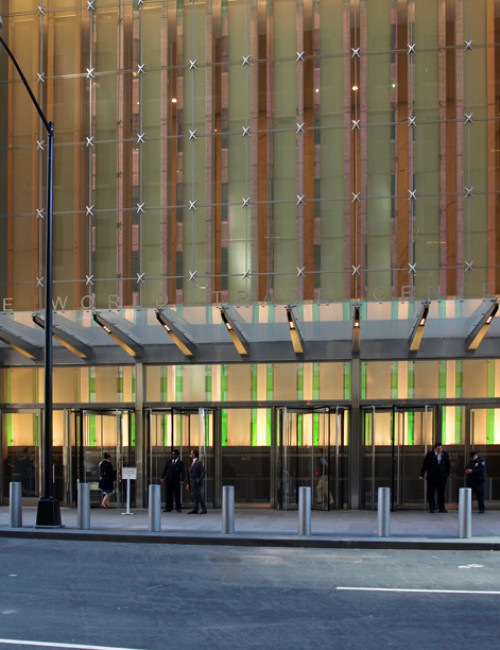
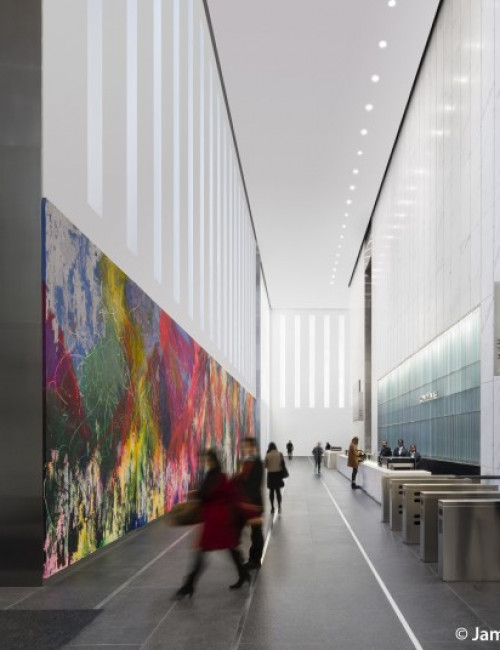
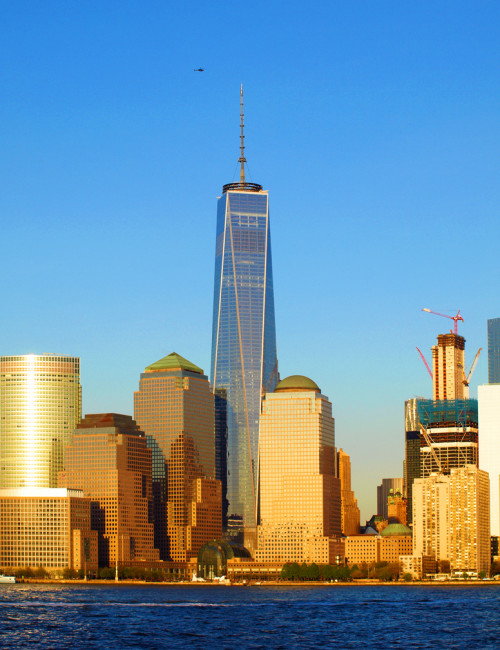
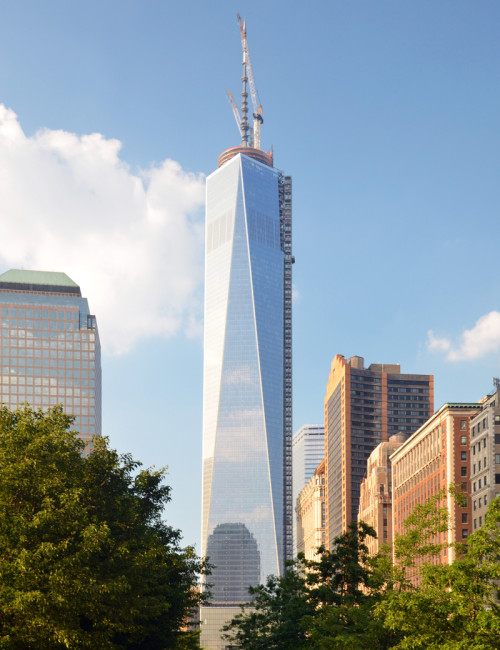
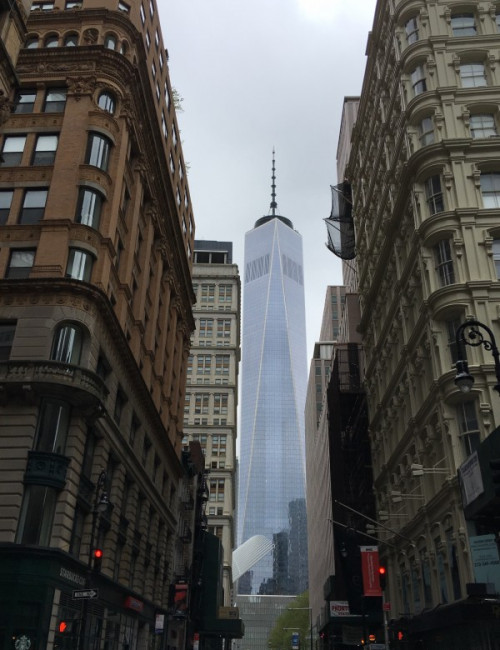
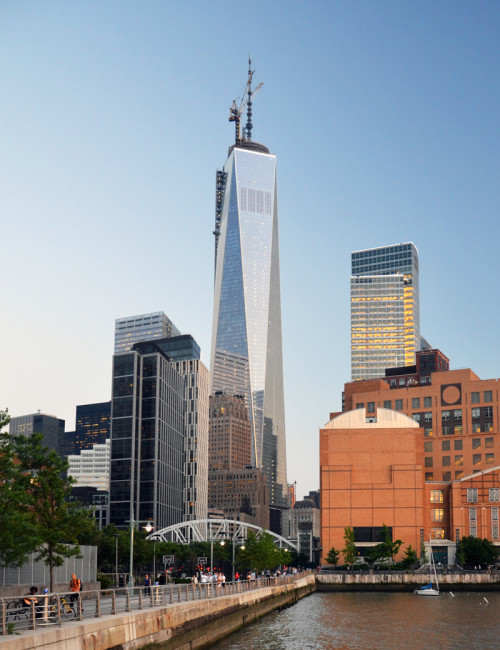
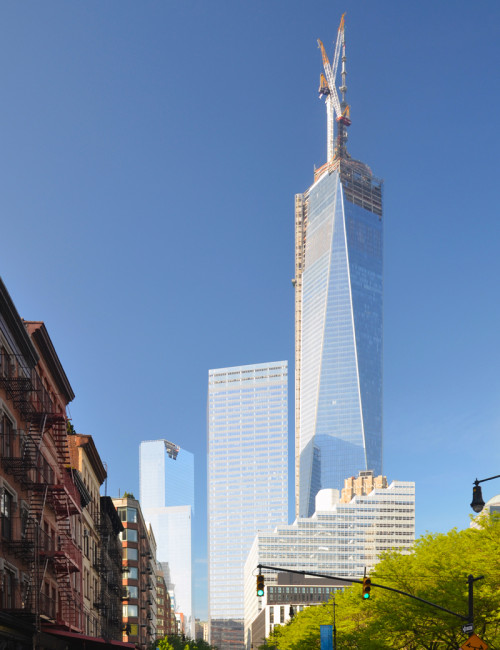
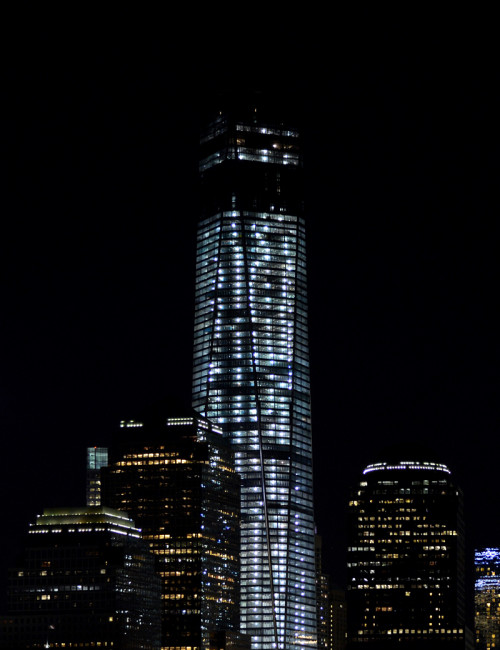
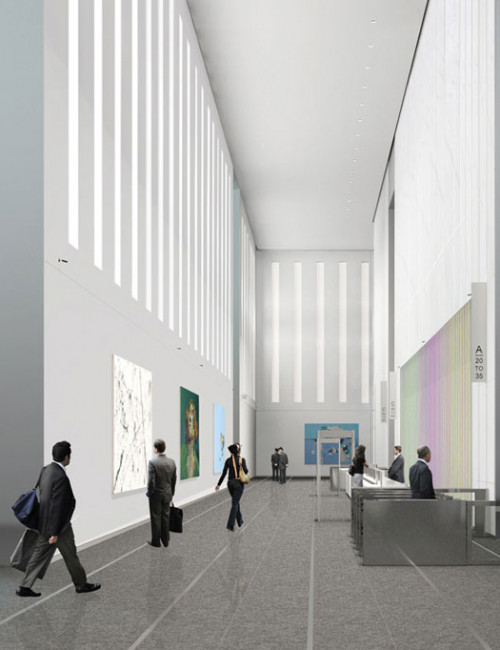
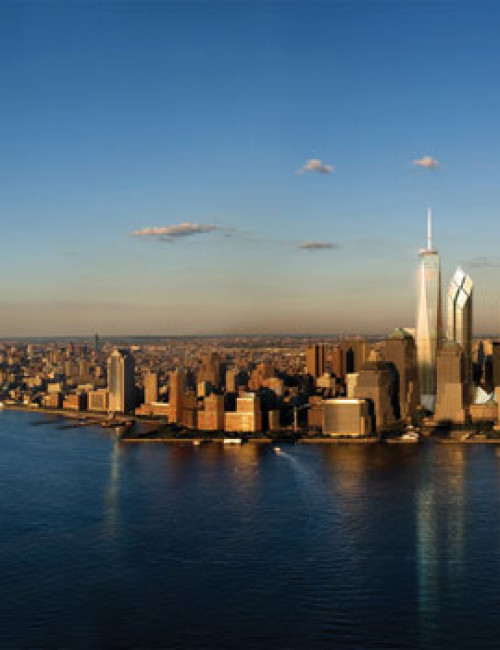
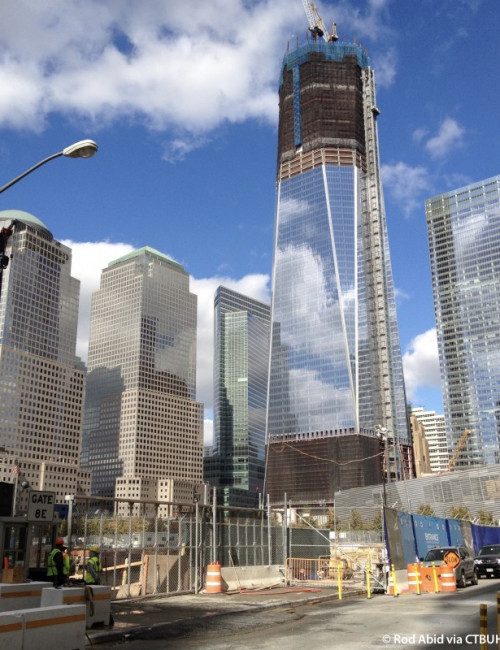
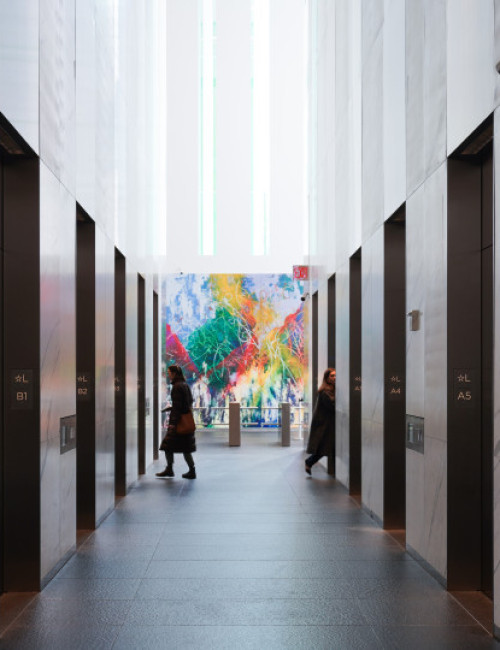
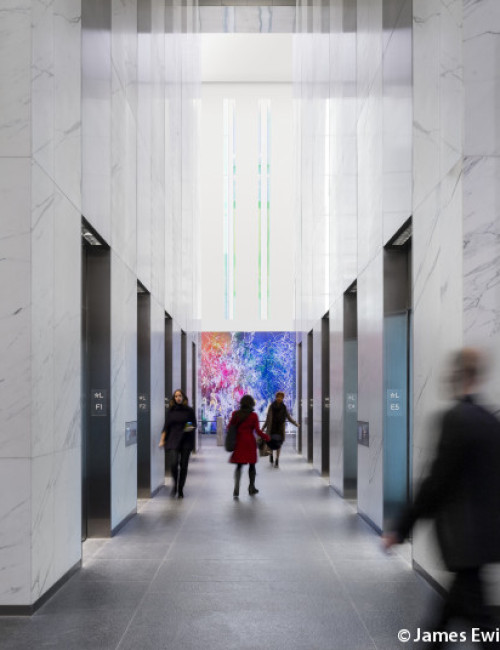
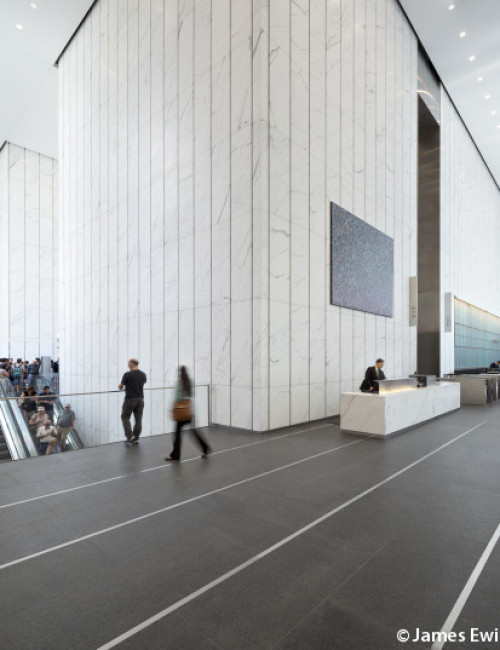
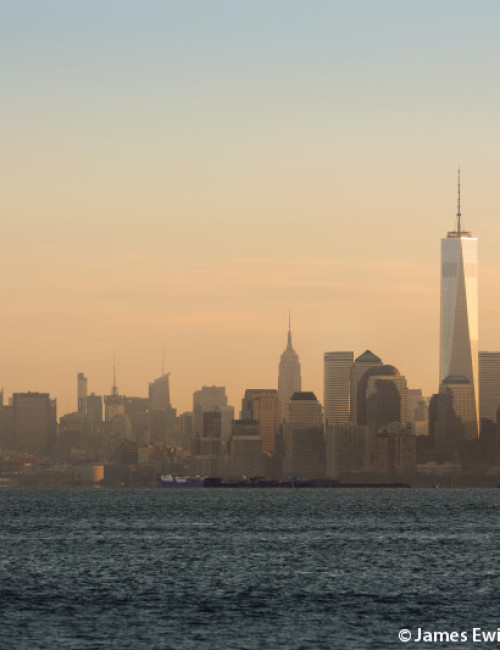
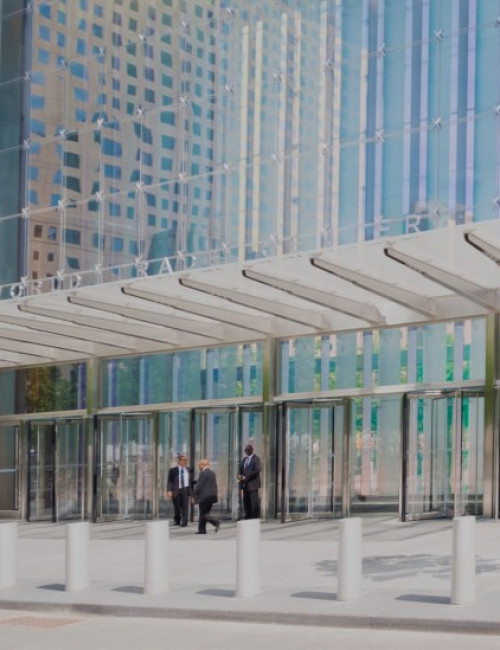
One World Trade Center recaptures the New York skyline, reasserts downtown Manhattan’s preeminence as a business center, and establishes a new civic icon for the country. It is a memorable architectural landmark for the city and the nation, and connects seamlessly to the city with linkages to an extensive underground transportation network. Extending the long tradition of American ingenuity in high-rise construction, the design solution is an innovative mix of architecture, structure, urban design, safety, and sustainability.
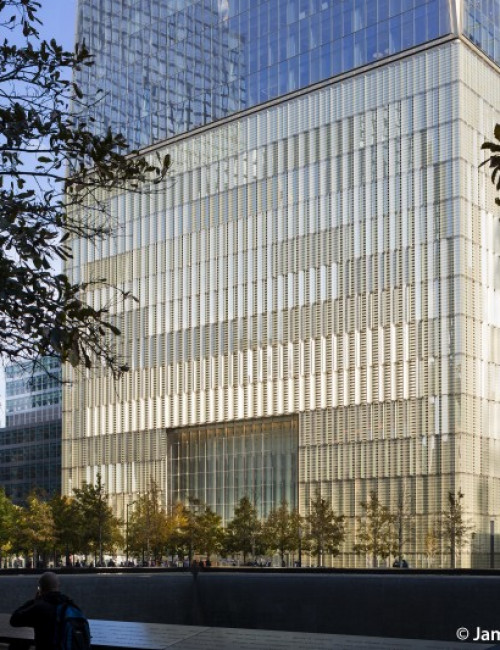
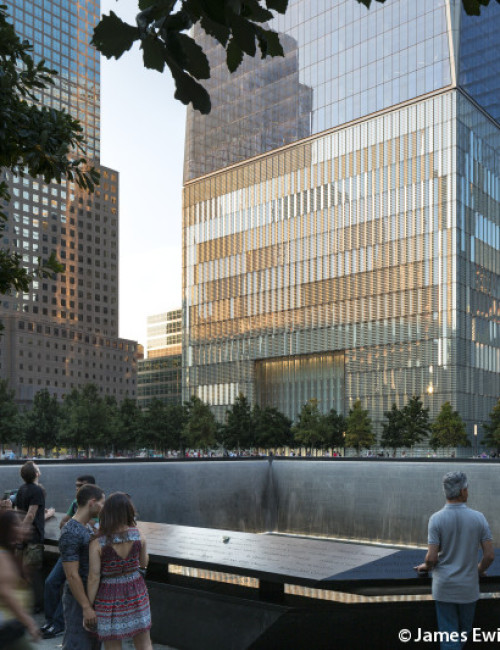
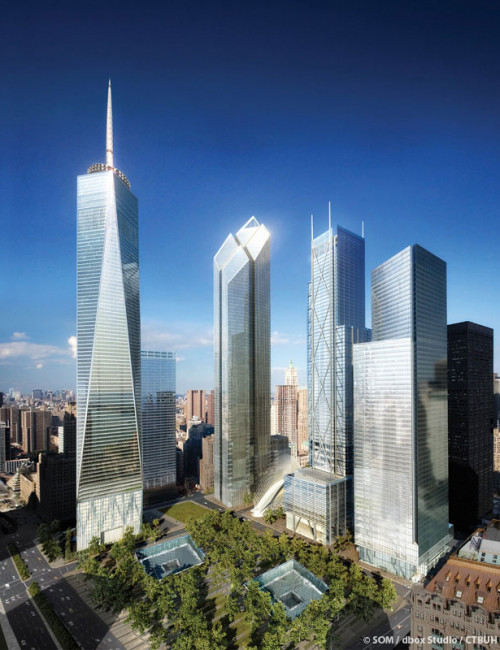
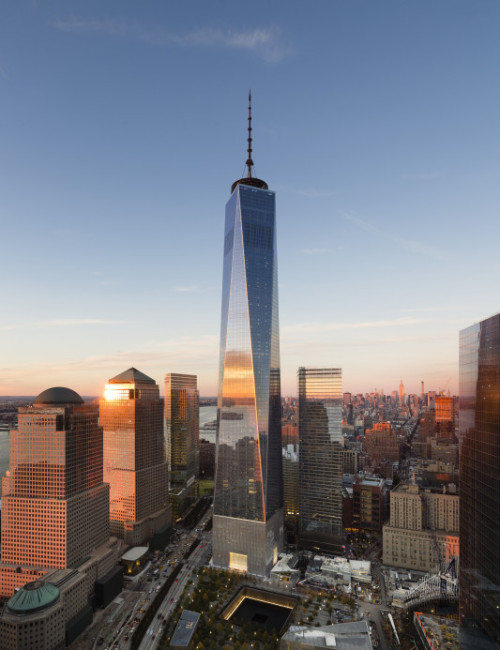
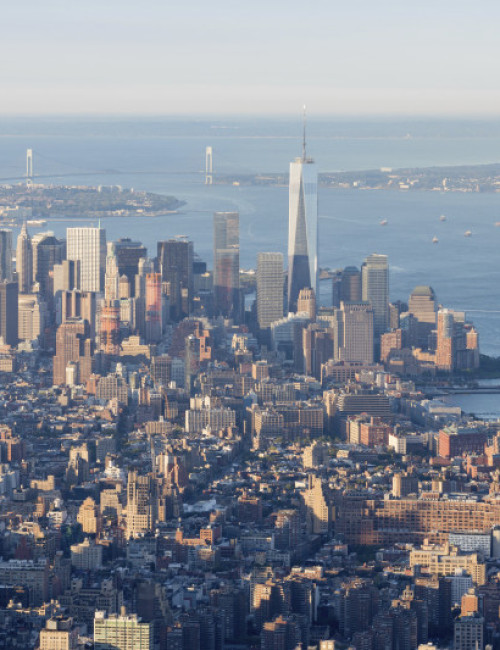
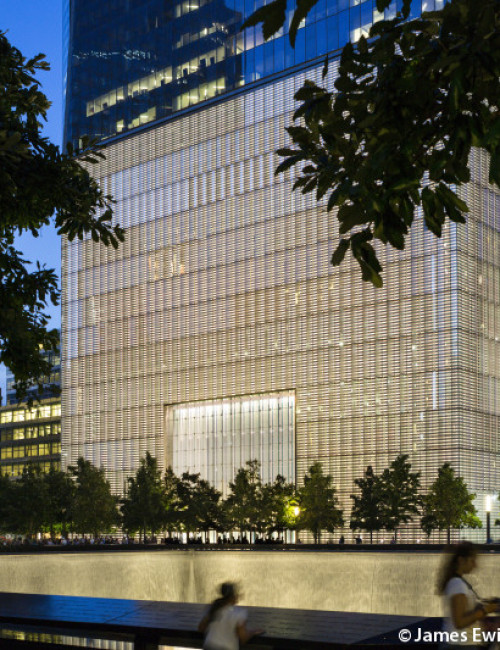
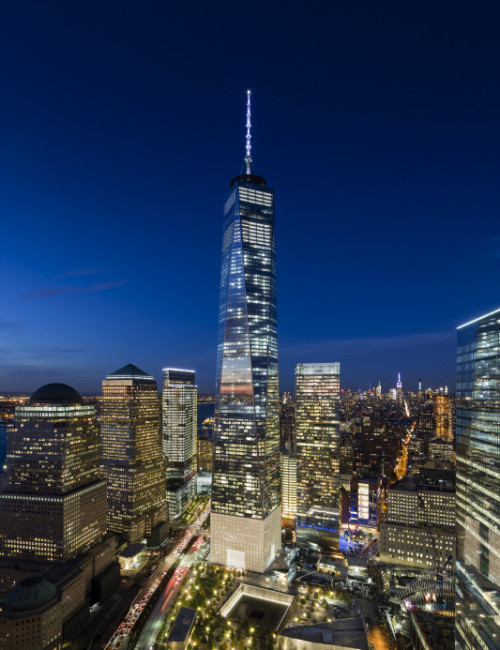
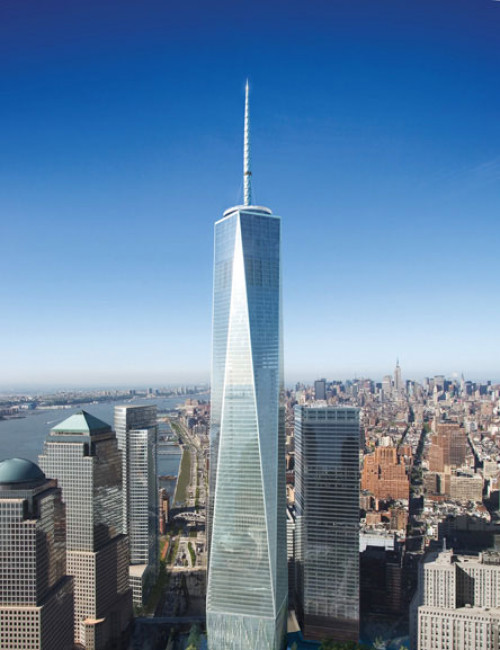
The tower is a bold icon in the sky that acknowledges the adjacent memorial. While the memorial, carved out of the earth, speaks of the past and of remembrance, One World Trade Center speaks about the future and hope as it rises upward in a faceted form filled with, and reflecting, light. This tower evokes the slender, tapering triangular forms of great New York City icons such as the Chrysler Building and Empire State Building and replaces almost one quarter of the total office space lost on September 11, 2001 in a single building.
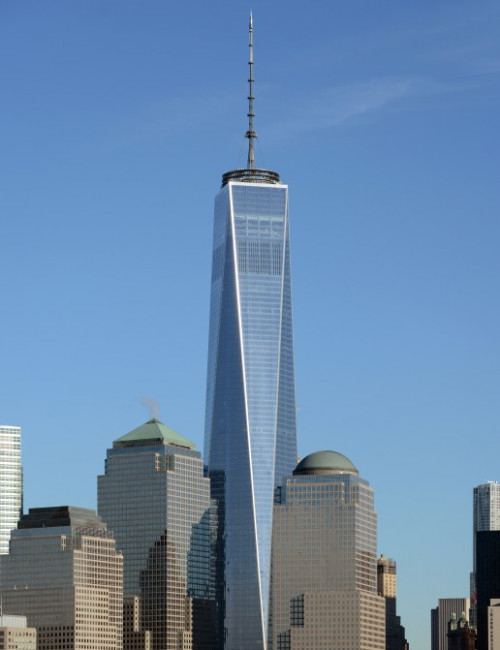
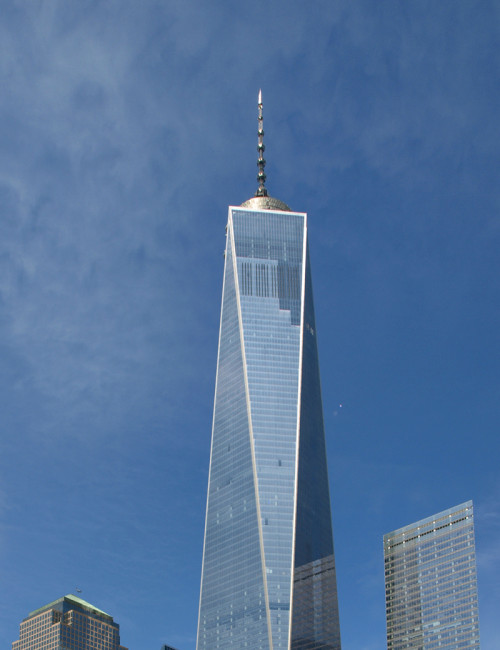
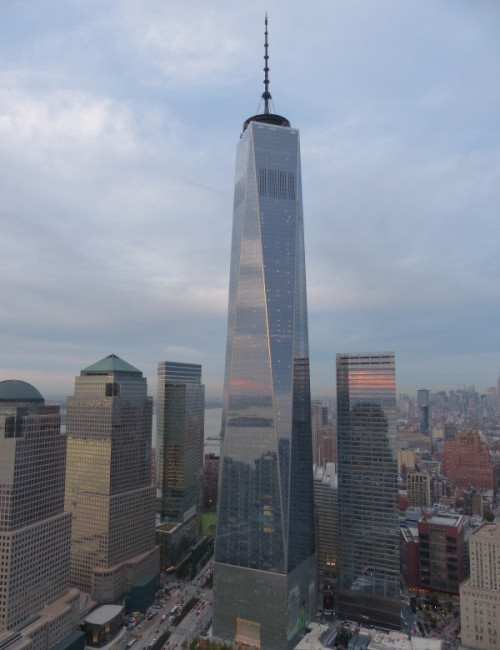
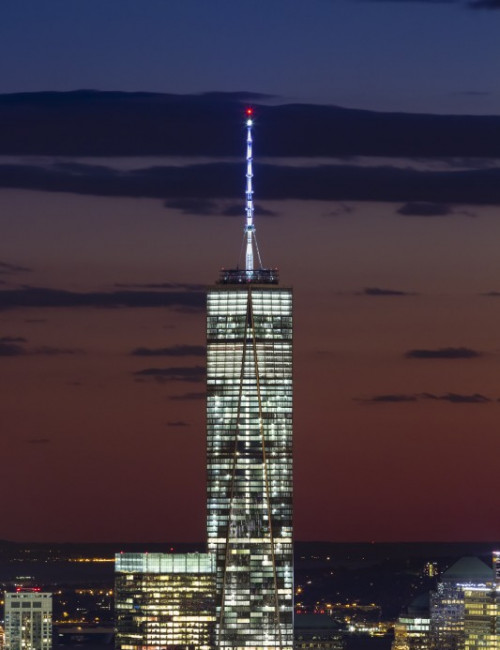
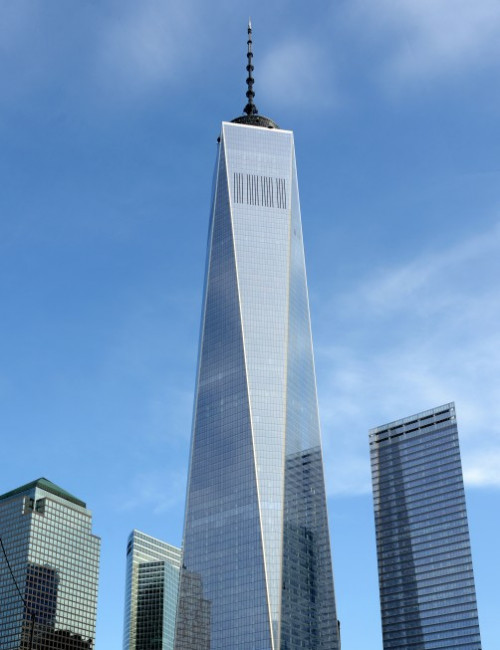
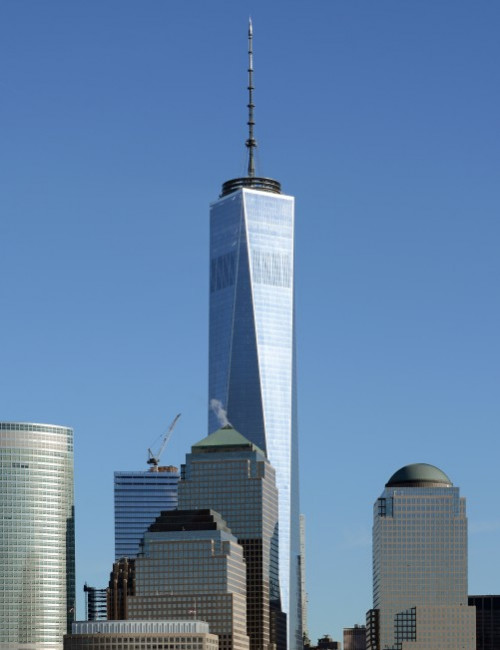
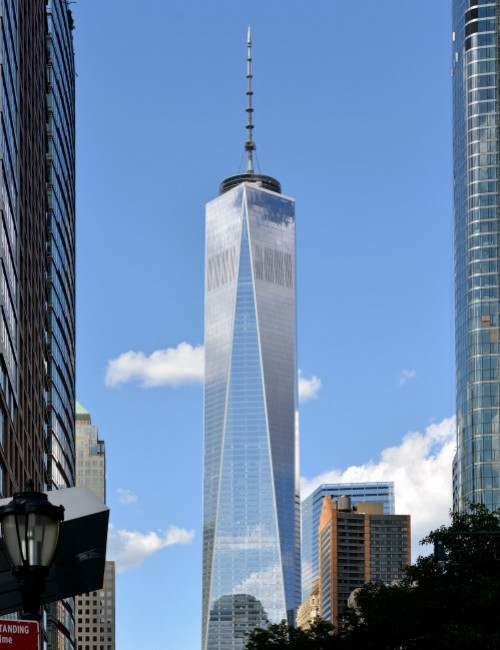
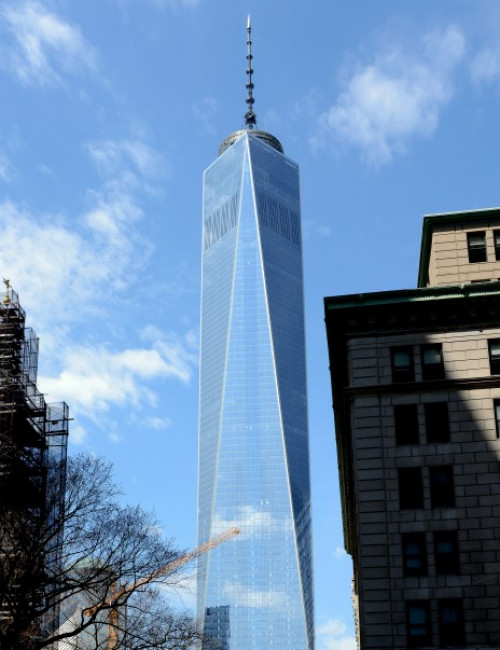
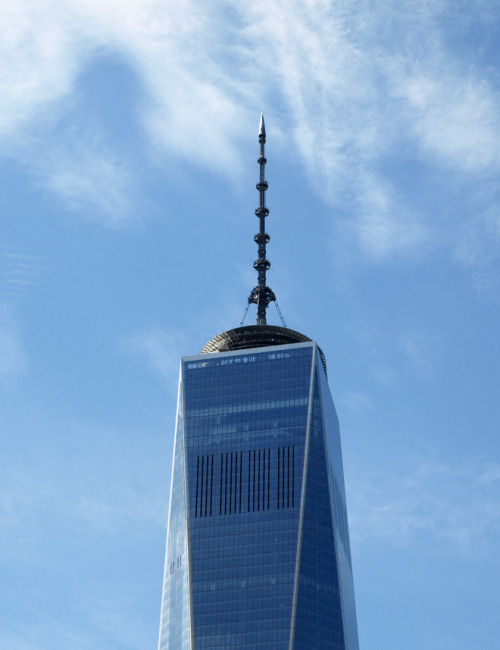
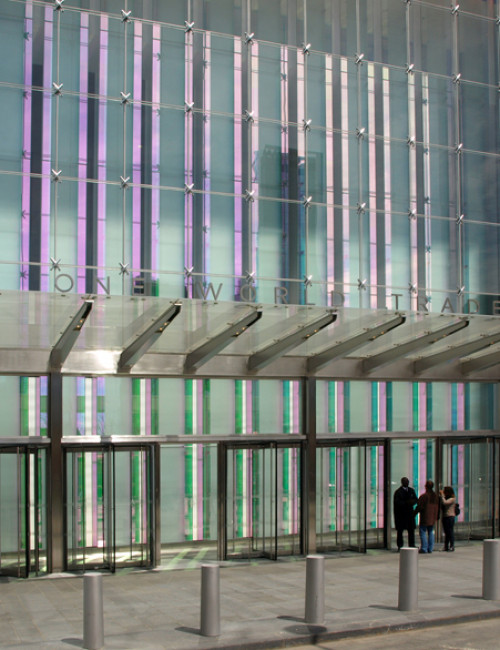
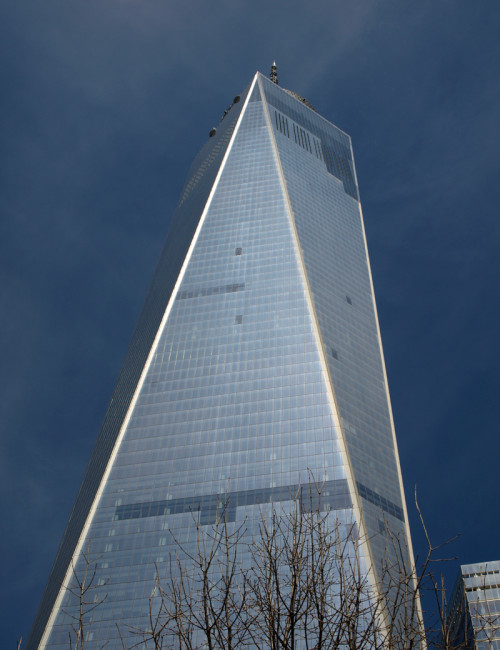
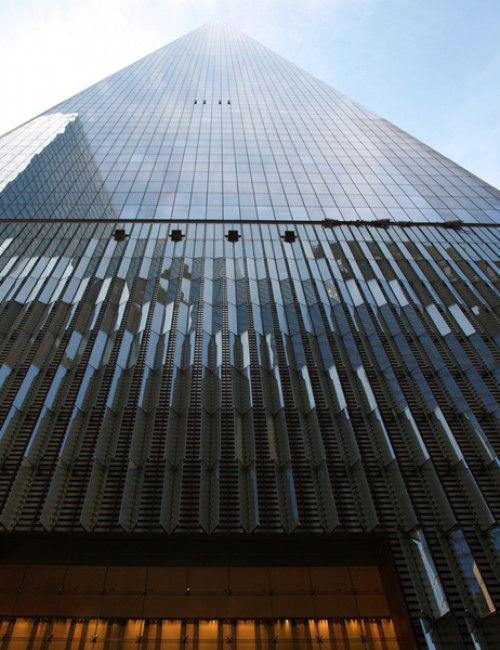
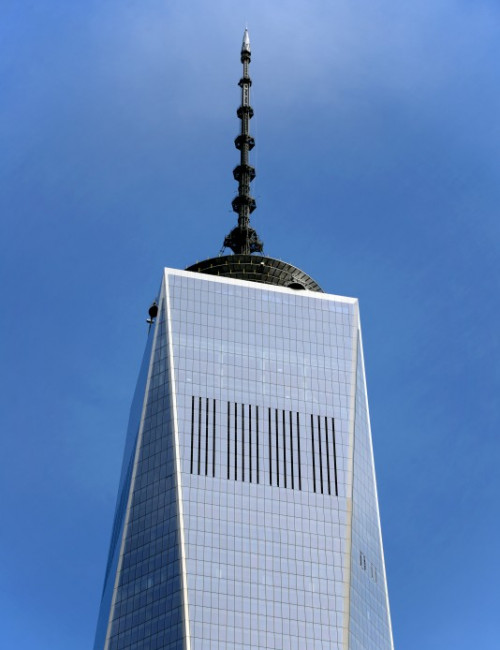
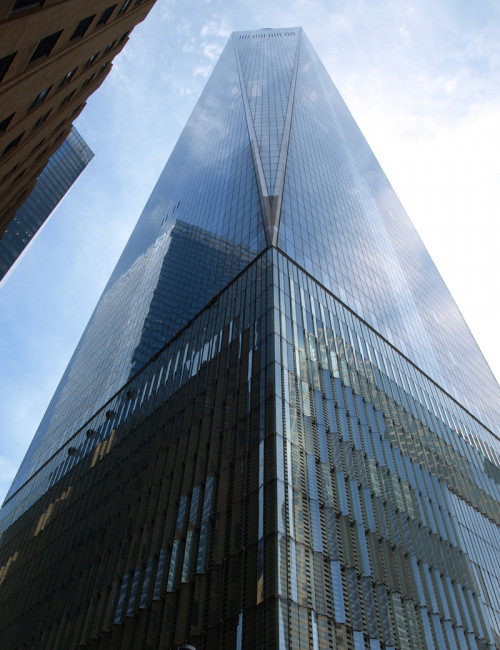
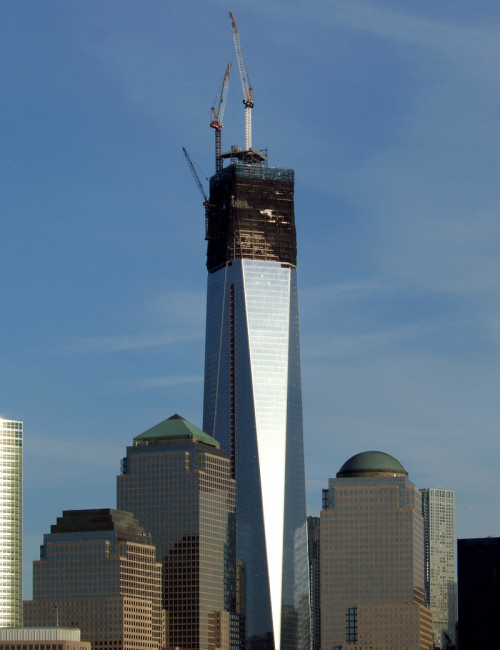
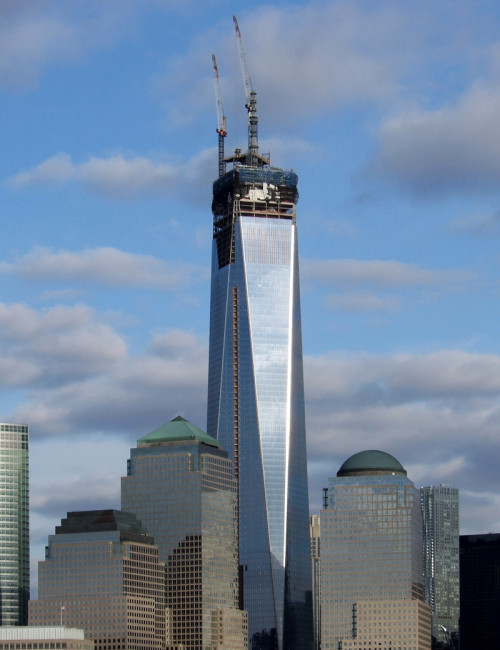
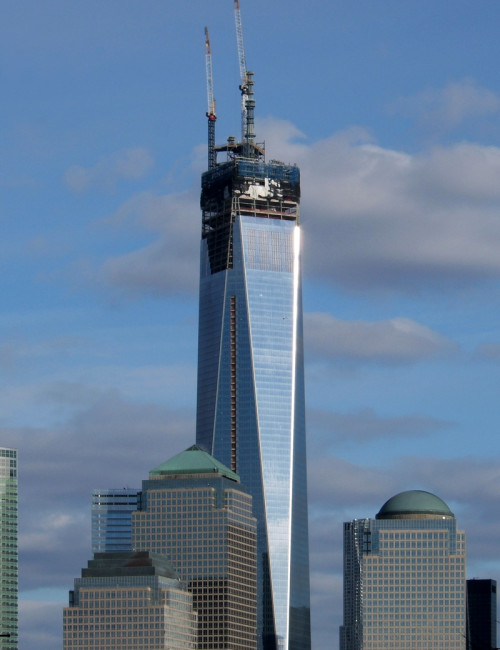
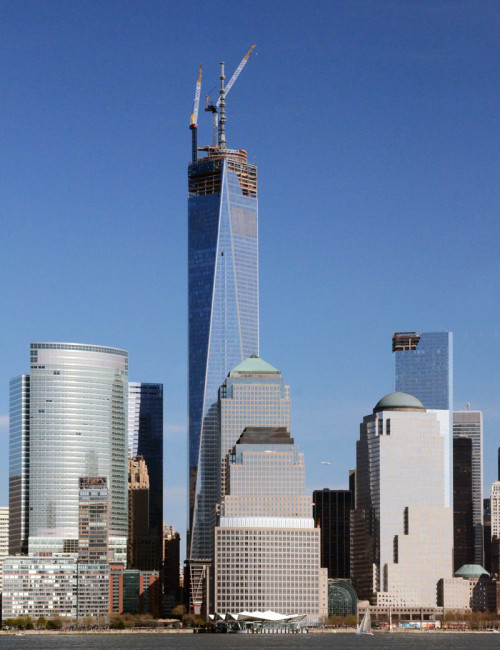
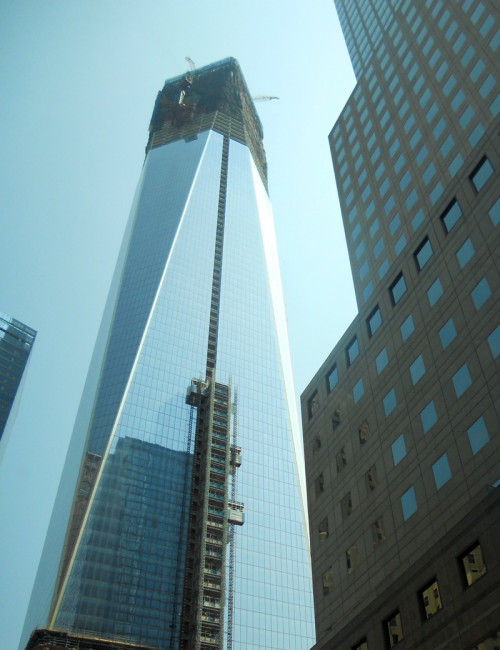
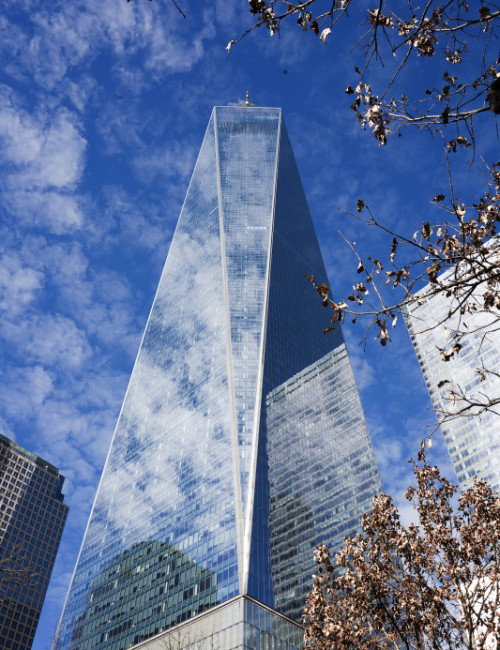
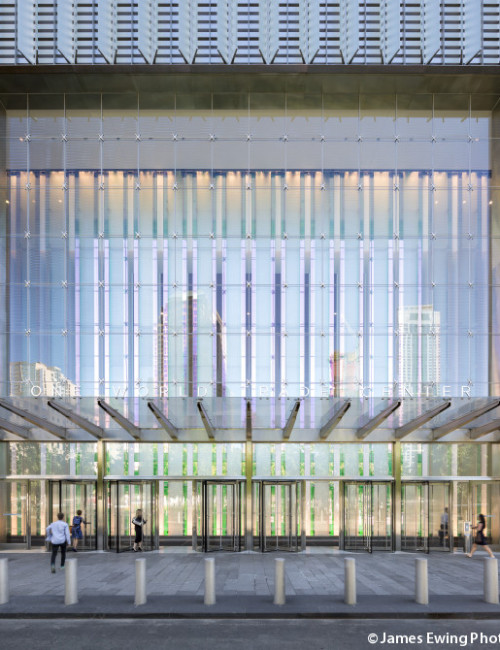
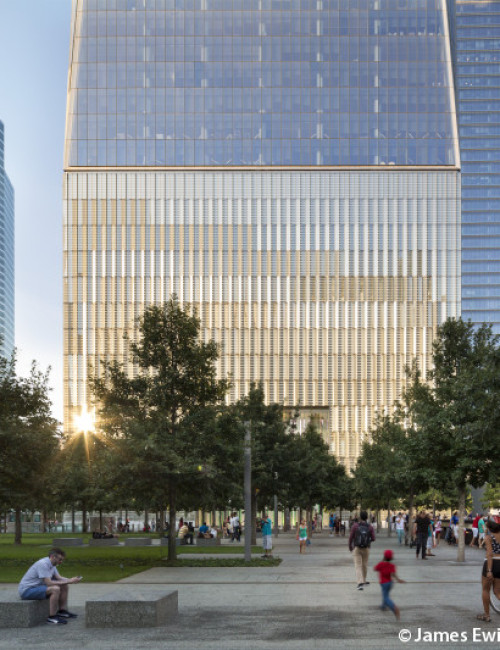
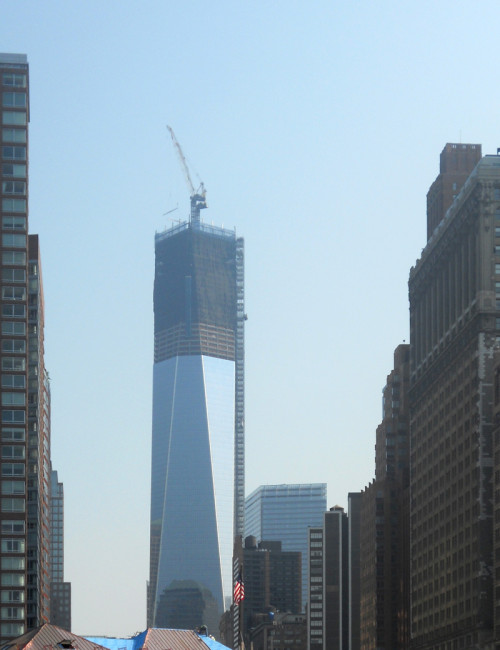
As the tower rises from a cubic base, its edges are chamfered back, resulting in a faceted form composed of eight elongated isosceles triangles. At its middle, the tower forms a perfect octagon in plan and then culminates in a glass parapet whose plan is a 150-foot-by-150-foot square, rotated 45 degrees from the base. Its overall effect is that of a crystalline form that captures an ever-evolving display of refracted light. As the sun moves through the sky or pedestrians move around the tower, the surfaces appear like a kaleidoscope, and change throughout the day as light and weather conditions change.
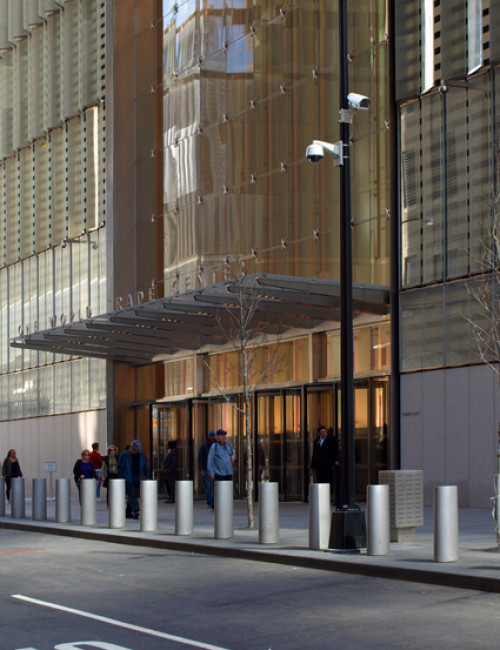
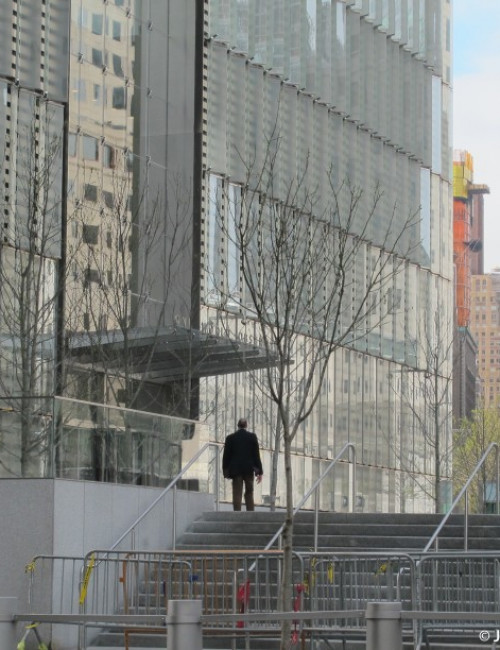
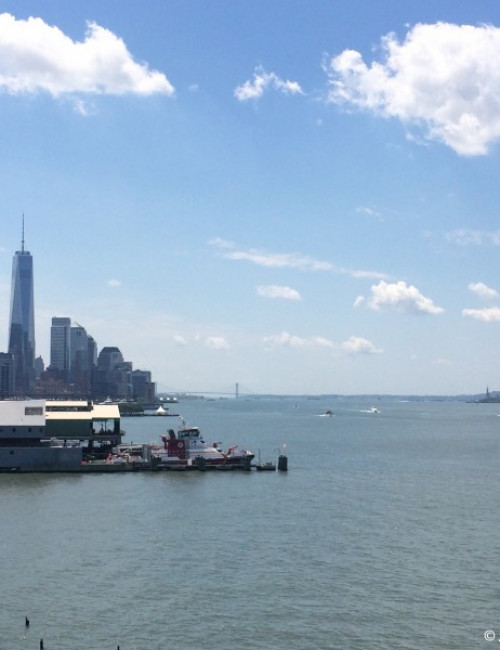
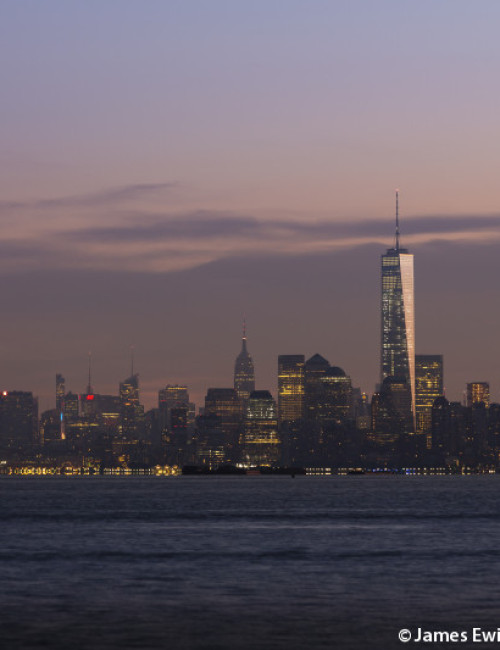
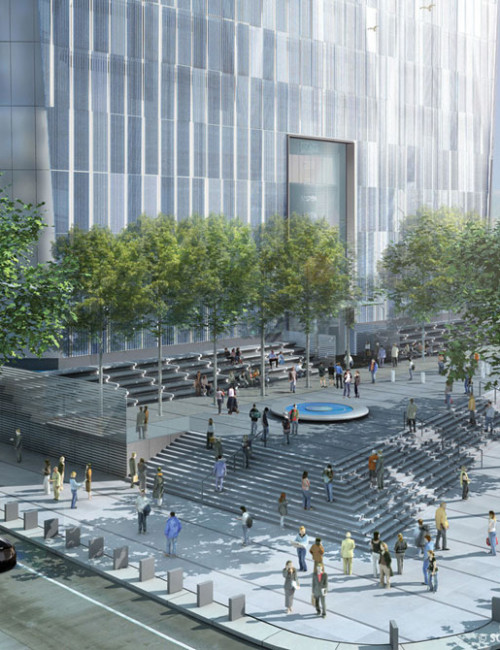
Today, as the tallest building in North America, the building commemorates 9/11 while honoring the legacy of the original tower. The development set the stage for the emotionally charged World Trade Center site, the re-emergence of the Financial District, and the enhancement of Lower Manhattan’s transportation interconnectivity. Generous open spaces, filled with trees and places of respite, help connect the building with the adjacent neighborhoods and allow views and access to the adjacent memorial.
CVU Awards & Distinctions
10 Year Award 2024 Winner
2024 CVU Awards
Best Tall Building, by Region 2015 Winner
2015 CVU Awards
Global News
15 April 2019
New Architects Brought in for Manchester’s St. Michael’s Tower
Skidmore, Owings & Merrill (SOM) has been brought in to deliver Hodder + Partners’ controversial Saint Michael’s tower in Manchester, with the local practice kept...

01 March 2019
As One Chicago Lakefront Project Gets a New Deadline, Another is Announced
The owner of the Chicago Spire site could have another year to begin developing the lakefront site, four months after a downtown alderman rejected a...

21 January 2019
“Tower Fifth” Could Become New York City’s Second-Tallest
For decades, the New York City skyline was dominated by one building, the 1,250-foot-tall (381-meter) Empire State Building. But 17 “supertall” skyscrapers — defined as...
Learn more about the Council on Vertical Urbanism
Discover how vertical living is shaping the next generation of urban environments. Explore insights, research, and global leadership in vertical urban development